The camera you take on an investigation shapes the kind of evidence you’re able to collect. There’s no single „best” option, and you don’t need expensive equipment to get meaningful results, but you do need to understand what different cameras can and can’t do.
Ghost hunters use everything from smartphones to full-frame DSLRs, and each brings its own advantages and limitations. What matters most is knowing how your camera behaves in low light, how it records movement, and what quirks or artefacts it might introduce. These quirks account for many common anomalies, which is why getting familiar with the strengths and weaknesses of your chosen camera is much more important than the brand name printed on the front.
Smartphones

Modern smartphones are very capable. They’re easy to use, fit in your pocket, and produce clean images in good lighting. They also introduce some predictable issues. The flash sits extremely close to the lens, which increases the chance of dust appearing as „orbs”, and aggressive software processing can blur or reshape details. Modes such as HDR, night mode and panorama rely on combining multiple exposures, so anything that moves, including investigators, can show up distorted, duplicated, or semi-transparent. If you rely on your phone, keep the settings simple and avoid features that blend multiple images.
Compact Digital Cameras
Compact cameras sit somewhere between a smartphone and a DSLR in terms of control. They don’t usually perform better than modern phones in low light, but they often give you a more honest image. Smartphones rely heavily on computational processing to brighten dark scenes, blending several frames together and smoothing out noise. Compact cameras generally don’t use this kind of aggressive manipulation, which means you’re less likely to see artefacts created by software.
Another practical difference is layout. The flash on a compact camera is typically positioned a little further from the lens than on a phone. This can reduce the chance of dust close to the lens showing up as bright orbs, although it doesn’t eliminate the problem entirely. Most compact cameras also give you the option to disable features like HDR and scene modes, helping you avoid the kind of multi-frame processing that can produce semi-transparent figures or distorted shapes.
Digital SLRs & Mirrorless Cameras
DSLRs and mirrorless camera give you the greatest level of control. You can choose your lenses, set exposure manually, and capture far more detail than smaller cameras allow. This level of control also means a higher chance of mistakes. Long exposures can create ghost-like smearing if you move even slightly, and fast-moving objects can behave strangely on modern sensors depending on the shutter type. These cameras are best suited to investigators who are comfortable adjusting settings such as ISO, shutter speed and aperture, or for teams who want to document a location in a more structured and controlled way.
Film Cameras
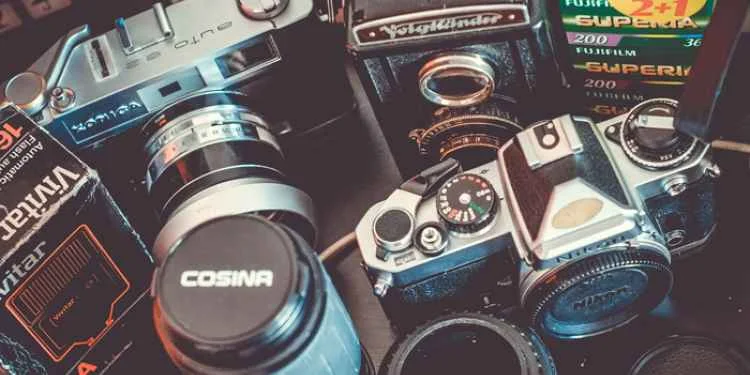
Some investigators prefer film because of its „analogue” character and the belief that it may capture things digital sensors cannot. What’s more certain is that film comes with its own predictable problems, such as light leaks, double exposures, aging film stock, and grain. These issues can produce images that look paranormal even when nothing unusual happened at the time. Film can be fun to experiment with, but if you want reliable results during an investigation you need to handle, store and shoot film carefully.
Specialised Cameras
There are also full-spectrum cameras, infrared photography and thermal imaging. These tools expand the range of light your camera can detect. They can be useful if you want to explore beyond the visible spectrum, but they also introduce new types of artefacts and require more understanding to use effectively. A full-spectrum camera doesn’t automatically increase your chances of capturing something paranormal – it simply captures more information, which must be interpreted carefully.
Practical Considerations
Whatever camera you choose, reliability matters more than anything else. Make sure you know how to switch off features that create accidental anomalies, carry spare batteries and memory cards, and clean your lens before each investigation. If you can, practise taking photos in low-light conditions so you develop a feel for how your camera responds. The more familiar you are with your equipment, the easier it becomes to recognise the difference between a genuine anomaly and a fault or artefact.
About the Author
Steve Higgins
Higgypop Founder & Paranormal Writer
Steve Higgins has been writing about the paranormal for almost two decades, covering ghosts, hauntings, and the paranormal attracting over 500,000 monthly readers.
Further Reading
Dive into the world of the paranormal and unexplained with books by Higgypop creator and writer Steve Higgins.
Whispers From The Other Side
A guide to capturing and analysing EVPs for ghost hunters of all levels, covering techniques and theories.
Buy Now
The Rational Demonologist
An exploration of demonic activity, including possession, protection, and exorcism.
Buy Now
See More on Amazon