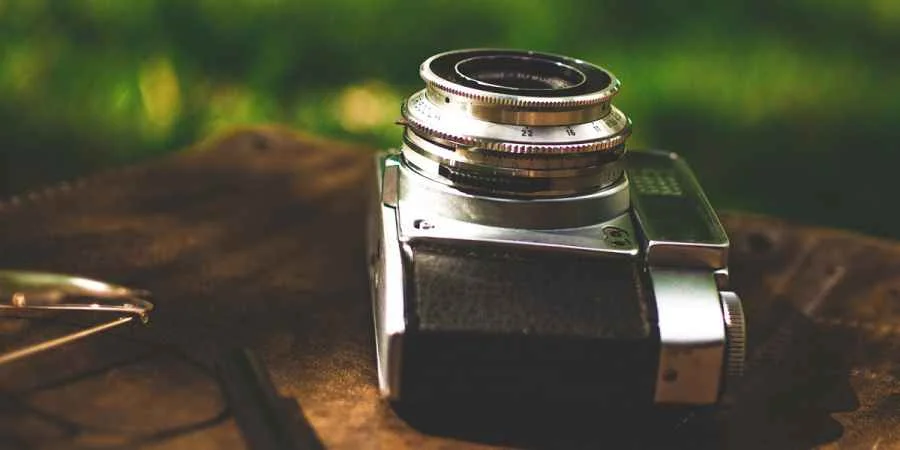
Modern investigators have access to everything from traditional 35mm film to smartphones and full-frame mirrorless cameras, and each behaves differently when faced with low light, fast movement, dust, or reflections.
Analogue cameras work by exposing light onto physical film, which introduces a few quirks that are worth understanding before you trust the results. One of the easiest mistakes is forgetting to wind the film on between shots. This creates a double exposure, where two images are recorded on the same frame, giving that classic semi-transparent figure that has fuelled spirit photography for more than a century. Even today, accidental double exposures remain one of the most convincing-looking false positives.
Film is also sensitive to the condition of the camera and the film stock itself. Old or poorly stored film can develop light leaks or fogging. Small cracks or gaps in the camera body can let in stray light, leaving streaks or patches that look nothing like what your eye saw at the time. On an investigation where lighting is already unpredictable, these artefacts can easily be misidentified as mists, beams or outlines.
Shooting in low light usually means choosing a high-ISO film. While this makes the camera more sensitive, it also increases grain. Grain amplifies patterns and shapes that weren’t present in the scene, which can play into pareidolia. Investigators using film tend to value its organic look, but it does require a cooler head when reviewing results.
Despite its limitations, film still has supporters in the paranormal field. Some feel its slower, more deliberate workflow encourages careful shot composition and reduces accidental motion blur. Others argue that film reacts differently to light and might capture things digital sensors miss. While these ideas aren’t proven, they remain part of the modern culture of spirit photography.
Film also can’t be digitally manipulated in the same way without leaving signs of tampering. Although not a perfect safeguard, the physical negative provides an object that can be examined, stored, and verified.
Digital cameras – whether DSLRs, mirrorless, compact, or smartphones – capture light using an electronic sensor rather than film. This changes the type of errors you might see. Because the sensor reads the scene in rows, fast-moving objects can become distorted or appear in the wrong place, especially with rolling shutter sensors. A spinning fan can show missing blades, and a moving figure can stretch or smear. Effects like these have been misinterpreted many times as paranormal shapes.
Many digital features that help everyday photography become obstacles in paranormal imaging. HDR mode, for example, takes several exposures and blends them. If anything moves during that process, the camera can create ghostly semi-transparent outlines without you ever noticing at the time. Panoramic modes work the same way, stitching multiple slices together. A moving person, shadow, flashlight beam or insect can be duplicated, stretched, or cut in half.
Low-light digital noise behaves differently to film grain. Instead of soft grain, digital noise introduces pixel-level patterns, coloured speckling, and blotches – especially on smartphones. When magnified or viewed quickly, these noise patterns can mimic vague figures, floating shapes, or faces.
Digital cameras offer one major advantage on investigations: instant feedback. Being able to check a photo immediately means you can try to replicate, debunk, or clarify an anomaly in real time. If something odd appears, you can adjust your angle, lighting, or camera settings and try again. This helps stop anomalies being misinterpreted once you’re away from the location.
Some digital cameras also capture metadata automatically – time stamps, exposure settings, and sometimes even location information. This is valuable when reviewing evidence or comparing multiple images later.
Both technologies can produce impressive images and both can produce misleading ones. Many classic anomalies – mists, streaks, orbs, shadows – can occur on either format for completely normal reasons. Understanding how each behaves gives you a better chance of avoiding false positives before they become part of your case file.